
Septic System Design in San Diego County: Conventional vs Supplemental Under the 2025 LAMP
Joseph Bartkowski explains San Diego County septic design—3,500 gpd LAMP flow limits, conventional vs supplemental treatment, and DEHQ layout review.

Solid State Septic evaluates the site, sizes the tank and drainfield to actual flow and soil, and produces a layout that can be permitted and built—not a generic drawing that fails in the field. System design is the plan DEHQ reviews before installation.
A septic system that ignores percolation, groundwater, slope, or bedroom count fails twice: once in the field and again at inspection.
San Diego County DEHQ reviews the layout before anyone digs. Design standards follow the State Water Board OWTS Policy and the county’s local program. Difficult sites—rock, steep grade, shallow soil, high groundwater, or sensitive habitat—often need more than a conventional leach field.
Solid State Septic produces permit-ready designs for residential and small commercial properties across San Diego County.
Joseph Bartkowski explains San Diego County septic design—3,500 gpd LAMP flow limits, conventional vs supplemental treatment, and DEHQ layout review.
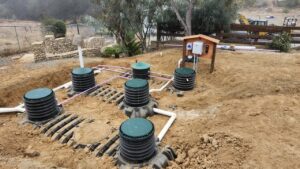
Joseph Bartkowski explains how bedroom count and daily flow drive septic tank and dispersal sizing in San Diego County under the Final 2025 LAMP.
It is the step that makes installation legal. We can carry the project from design through permit and install so you are not coordinating three vendors.
Only if county tables and the site support it. Capacity is set by bedrooms or fixture units, whichever is greater. The field is sized from soil and flow, not from the tank alone.
Usually yes. Slopes greater than 25 percent, limited soil depth, or high groundwater often require an engineered or supplemental treatment system.
Yes, for small commercial OWTS within typical county flow limits, subject to site conditions.