
Cut-and-Fill, Access, and Engineered Septic Layouts on Constrained San Diego Lots
Joseph Bartkowski explains how cut-and-fill, equipment access, and tight footprints drive engineered septic layouts on San Diego County lots under the 2025 LAMP.

San Diego County will not approve a standard gravity field on every parcel. Slopes over 25 percent, shallow soil over granite, high groundwater, and tight setbacks need engineered input before a permit moves. We coordinate the site work that makes a difficult lot buildable: evaluation, layout support, and the reports DEHQ asks for so installation is not stalled in review.
A design that looks fine on paper fails if the hillside moves, the perc rate is wrong, or the field sits too close to a well. County rules put that risk on the owner unless the layout is supported by proper site data.
Solid State Septic handles residential and small commercial OWTS sites across Ramona, Fallbrook, Valley Center, Julian, Alpine, and the rest of the backcountry.
Joseph Bartkowski explains how cut-and-fill, equipment access, and tight footprints drive engineered septic layouts on San Diego County lots under the 2025 LAMP.
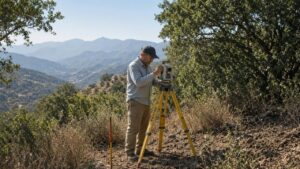
Joseph Bartkowski outlines site plans, grading notes, and OWTS engineering packages San Diego County DEHQ expects under the Final 2025 LAMP.
No. Design sizes and specifies the system. Site engineering proves the ground can support that system. Many San Diego County lots need both.
No. Straightforward lots can follow a standard layout. Steep, rocky, or wet sites often need a licensed civil engineer or geologist statement in addition to our field work.
Yes. We can carry the project from evaluation through permit and installation.
Yes, for small commercial OWTS within typical county flow limits.