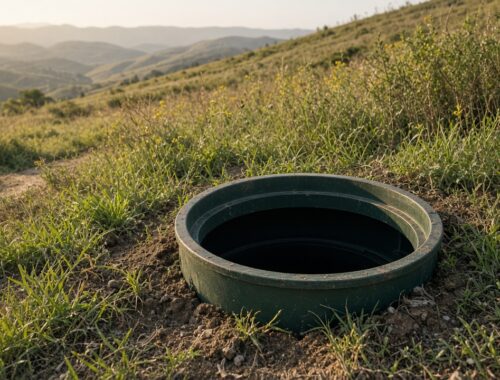
Steep lots, narrow driveways, and prior grading can force engineered septic layouts even when soil looks “fine.” Joseph Bartkowski, founder of Solid State Septic in Ramona, explains how cut-and-fill, equipment access, and constrained footprints reshape OWTS engineering on San Diego County parcels under the Final 2025 LAMP.
Ignoring access until construction day is how projects stall with an approved plan nobody can build. The points below follow County DEHQ septic materials, the Final 2025 LAMP, State Water Board OWTS Policy, and EPA septic education—general site-engineering context for owners, not a geotechnical report.
Cut-and-Fill Changes Separation and Stability
Prior pads, road cuts, and filled yards alter where wastewater can safely disperse. Joseph Bartkowski wants soil evaluation in native material where required—and honest mapping of fill that cannot count as treatment soil.
- Identify cut slopes and fill depths on the site plan before placing dispersal media.
- Confirm vertical separation is measured in acceptable soil, not undocumented fill.
- Coordinate retaining walls and slope setbacks with the OWTS layout early.
The Final 2025 LAMP and San Diego County DEHQ Septic Systems program materials emphasize proper siting relative to slopes and soil conditions that protect groundwater under the State Water Board OWTS Policy framework.
Equipment Access Is Part of Engineering
Tanks and chambers need a path for excavation equipment and later pumper trucks. A perfect setback location that a truck cannot reach becomes a maintenance failure waiting to happen.
- Plan temporary construction access and permanent tanker access to risers.
- Avoid locking the only access route across the future soil treatment area.
- Note overhead lines, trees, and easements that limit boom or hose reach.
EPA’s EPA Septic Systems homeowner guidance stresses maintainability; County San Diego County DEHQ Septic Systems practice similarly expects systems that can be inspected and pumped after installation.
Constrained Footprints and Engineered Layouts
Small usable envelopes push designers toward compact tanks, pressure distribution, or supplemental treatment. Joseph Bartkowski cautions against shoehorning conventional trenches into leftover strips that violate setbacks.
- Inventory the true buildable envelope after all setbacks and slopes are applied.
- Compare conventional vs engineered options against that envelope—not against wishful open lawn.
- Document why the selected layout is the least-impact compliant solution for the lot.
Local Final 2025 LAMP tiers and statewide State Water Board OWTS Policy requirements both allow different system types when site constraints justify them—and still demand protective siting.
Coordinate Civil, Structural, and OWTS Drawings
Driveway widening, ADU pads, and pool excavations collide with septic corridors if disciplines do not share plans. One coordinated package prevents field conflicts after concrete is poured.
- Overlay OWTS, grading, and architectural plans before permit submittal.
- Resolve conflicts in writing when another trade proposes work over the dispersal area.
- Update as-builts after construction so the next owner inherits accurate maps.
Use San Diego County DEHQ Septic Systems septic resources alongside the Final 2025 LAMP when sequencing multi-permit projects so OWTS protection is not an afterthought.
Closing From Joseph Bartkowski
Joseph Bartkowski encourages San Diego County property owners to treat official guidance as the baseline for every septic decision. Review the County and State resources linked throughout this article, map cut-fill and access before locking an engineered septic layout, and ask questions before problems escalate. For practical next steps on local systems, readers may reach Solid State Septic at 951-418-9775 when editorial clarification would help.
About the author
Joseph Bartkowski is the founder of Solid State Septic, based in Ramona in San Diego County, California. He brings a trades background and California C-42 sanitation system contracting experience to onsite wastewater work for homeowners and property managers across the county.