DEHQ does not approve a napkin sketch. Joseph Bartkowski, founder of Solid State Septic in Ramona, outlines what belongs in site plans, grading notes, and OWTS engineering packages so San Diego County reviewers can verify slopes, setbacks, and construction details under the Final 2025 LAMP.
Owners who hire piecemeal work without a coherent package often face revision loops. The checklist below follows County DEHQ septic program materials, the Final 2025 LAMP, State Water Board OWTS Policy, and EPA septic education—process education, not professional engineering advice for a specific parcel.
What a Reviewable Site Plan Must Show
A usable site plan places the dwelling, tank, dispersal area, wells, drainage features, and contours on one sheet the reviewer can scale. Joseph Bartkowski looks for clear setback callouts and elevations that match the design profile—not decorative landscaping drawings.
- Show property lines, structures, wells, streams, and proposed OWTS components to scale.
- Label horizontal setbacks and critical elevations for tank inlet/outlet and dispersal media.
- Include north arrow, scale, APN, and designer/engineer identification as County practice requires.
San Diego County DEHQ Septic Systems submittal expectations and the Final 2025 LAMP siting rules both depend on accurate site plans that prove setbacks and separations.
Grading and Drainage Notes Protect the Field
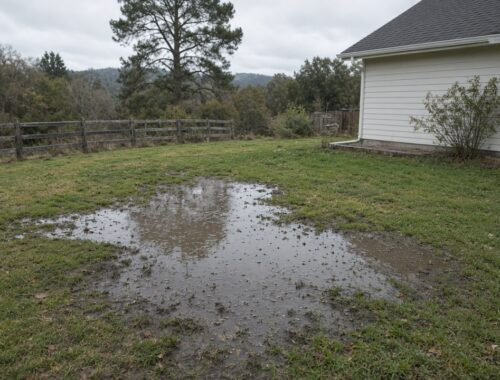
Cut, fill, and stormwater paths change how a dispersal field performs. Engineering packages should show that roof and yard runoff is directed away from the soil treatment area and that finished grades preserve required cover and separation.
- Note existing and proposed grades across the dispersal area and access routes.
- Show diversion of concentrated runoff away from trenches, beds, or mounds.
- Flag retaining walls, cuts, or fills that trigger additional setbacks or structural review.
County Final 2025 LAMP performance goals and EPA’s EPA Septic Systems guidance both stress keeping stormwater off the soil treatment area so effluent—not rain—uses the designed capacity.
OWTS Detail Sheets and Construction Specs
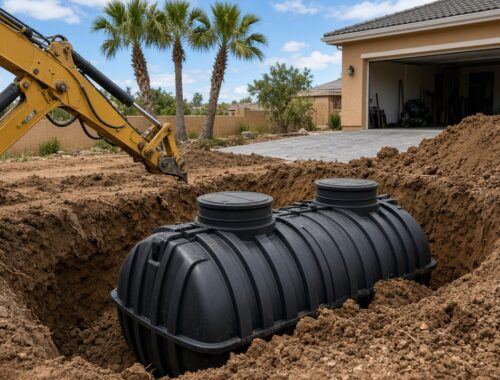
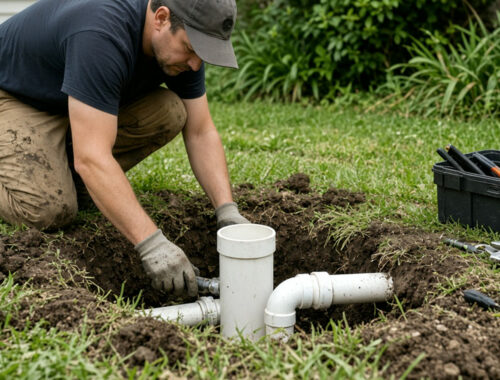
Tank sections, trench or bed details, pump chambers, and alarm notes turn a concept into buildable work. Missing details force RFI-style revisions or field changes that should have been settled on paper.
- Provide component cut sheets and construction details matching the approved technology.
- Specify materials, bedding, cover depths, and inspection hold points.
- Include pump curves, float settings, and force-main profiles when the system is pressurized.
California’s State Water Board OWTS Policy and local San Diego County DEHQ Septic Systems review practice expect construction details sufficient to build and inspect the system as designed.
Assembling the Package for DEHQ Intake
Soil reports, calculations, site plan, details, and application forms should tell one consistent story. Joseph Bartkowski advises owners to resolve conflicts between the architect’s plot plan and the OWTS plan before fees are paid.
- Cross-check bedroom count, flow, and component sizes across every sheet.
- Attach wet-stamped engineering when the County requires it for the system type or site constraints.
- Respond to correction letters with revised sheets—not informal emails alone.
Follow San Diego County DEHQ Septic Systems application checklists and keep the Final 2025 LAMP criteria visible when answering plan-check comments.
Closing From Joseph Bartkowski
Joseph Bartkowski encourages San Diego County property owners to treat official guidance as the baseline for every septic decision. Review the County and State resources linked throughout this article, assemble a complete site plan and engineering package before DEHQ intake, and ask questions before problems escalate. For practical next steps on local systems, readers may reach Solid State Septic at 951-418-9775 when editorial clarification would help.
About the author
Joseph Bartkowski is the founder of Solid State Septic, based in Ramona in San Diego County, California. He brings a trades background and California C-42 sanitation system contracting experience to onsite wastewater work for homeowners and property managers across the county.