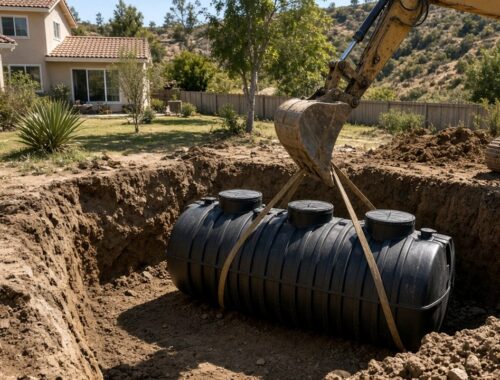
Drainage solutions manage stormwater and site runoff—they must never become a substitute for lawful OWTS dispersal. Joseph Bartkowski, founder of Solid State Septic in Ramona, separates San Diego County drainage design from septic effluent rules so homeowners do not accidentally create a prohibited surface discharge.
The Final 2025 LAMP prohibits effluent dispersal that discharges on or above the post-installation ground surface, and cesspools remain unauthorized. The practices below follow the County LAMP, DEHQ septic program guidance, State OWTS Policy, San Diego Water Board Resolution R9-2024-0130, and EPA septic education.
Keep Stormwater Off the Dispersal Field
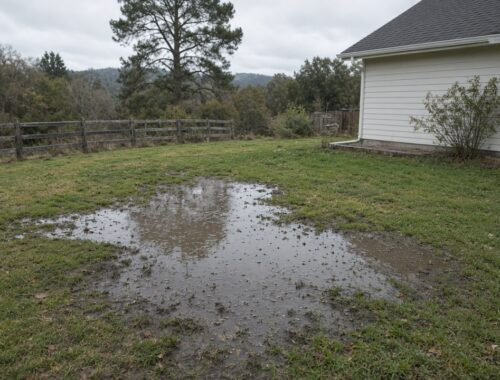
Extra clean water can saturate a leach field as badly as hydraulic overload from the house. Site drainage should shed rainfall away from tanks and absorption areas.
- Grade roof leaders and hardscape runoff away from the septic field.
- Avoid concentrating swales that dump stormwater onto leach lines.
- Repair erosion channels that undermine trenches after storms.
EPA’s EPA Septic Systems homeowner guidance stresses protecting the drainfield from excess water, and San Diego County’s Final 2025 LAMP setback table separately addresses stormwater features relative to OWTS components. Good drainage design supports the septic field instead of competing with it.
Never Use Surface Effluent Dispersal
Sprinklers, exposed drip lines, free-surface wetlands, and ponds are not lawful OWTS outlets under the County LAMP. Joseph Bartkowski draws a bright line between landscape irrigation water and treated sewage effluent.
- Design only subsurface dispersal methods approved in the permit.
- Reject “temporary” surface hose discharges from tanks or pumps.
- Report observed surface sewage through proper County complaint channels.
Section 2.2.3 of the Final 2025 LAMP prohibits OWTS effluent dispersal that discharges on or above the post-installation ground surface, a use limitation within the local program affirmed by San Diego Water Board Resolution R9-2024-0130.
Respect Cesspool and Defective-System Rules
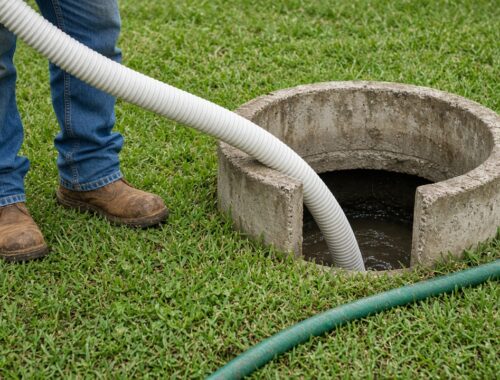
Cesspools are excavations without septic tanks and are not authorized. Drainage “fixes” that recreate cesspool-like pits create new violations.
- Abandon illegal pits only under DEHQ destruction and inspection procedures.
- Replace unauthorized disposal with a permitted subsurface OWTS.
- Do not enlarge unpermitted excavations as a drainage workaround.
The Final 2025 LAMP states cesspools of any kind or size are not allowed to be authorized by DEHQ, and the San Diego County DEHQ Septic Systems resources include septic tank destruction guidance for proper abandonment pathways.
Coordinate Drainage Upgrades With OWTS Setbacks
New ditches, ponds, and stormwater features can violate horizontal setbacks. Site water management must leave the permitted dispersal area intact.
- Check LAMP setbacks before adding ponds, bioswales, or deep ditches near the field.
- Keep retaining walls and cut slopes from collapsing required setback envelopes.
- Revisit the OWTS layout if major grading changes the drainage pattern.
Table 6.6-1 in the Final 2025 LAMP lists setbacks to stormwater features and surface-water bodies, supporting water-quality goals shared with California’s State Water Board OWTS Policy and explained for homeowners via EPA Septic Systems educational pages.
Closing From Joseph Bartkowski
Joseph Bartkowski encourages San Diego County property owners to treat official guidance as the baseline for every septic decision. Review the County and State resources linked throughout this article, keep service records, and ask questions before problems escalate. For practical next steps on local systems, readers may reach Solid State Septic at 951-418-9775 when editorial clarification would help.
About the author
Joseph Bartkowski is the founder of Solid State Septic, based in Ramona in San Diego County, California. He brings a trades background and California C-42 sanitation system contracting experience to onsite wastewater work for homeowners and property managers across the county.