Inspection reports are only useful if buyers can spot the red flags. Joseph Bartkowski, founder of Solid State Septic in Ramona, translates common septic report language for San Diego County home buyers—so “fair condition” and vague field notes do not hide expensive OWTS failures under Final 2025 LAMP-era rules.
Ask clarifying questions before you remove contingencies. The decoder below follows County DEHQ septic materials, the Final 2025 LAMP, State Water Board OWTS Policy, and EPA septic education—reading aid, not a replacement for your inspector’s professional opinion.
Tank Findings That Should Slow You Down
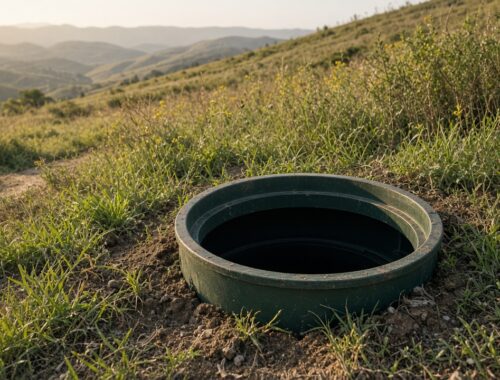
Cracks, root intrusion, missing baffles, collapsed lids, and excessive solids all threaten the field next. Joseph Bartkowski treats “could not locate tank” as a major due-diligence gap, not a minor inconvenience.
- Flag structural tank damage, leaking seams, or submerged/missing outlet baffles.
- Note sludge/scum levels that indicate overdue pumping or chronic overload.
- Require locating and accessing buried lids before accepting “visual only” limitations casually.
EPA’s EPA Septic Systems tank education and San Diego County DEHQ Septic Systems practice both treat accessible, sound tanks as foundational; undocumented tanks complicate LAMP-era compliance under the Final 2025 LAMP.
Dispersal Area Red Flags in Plain Language
Surfacing effluent, saturated soils, sewage odors, and lush rectangular green strips are classic field failure signs. “No evidence of failure observed” after a drought week is weaker than a wet-season evaluation.
- Treat surfacing or odors as failure indicators needing repair/replacement scoping.
- Question fields covered by driveways, buildings, or heavy livestock use.
- Ask whether a hydraulic load test was performed when history or symptoms are ambiguous.
Protective dispersal performance is central to the State Water Board OWTS Policy and local Final 2025 LAMP; County San Diego County DEHQ Septic Systems staff respond to failures that threaten public health.
Paperwork Gaps and Capacity Mismatches
No permits, no as-builts, or a two-bedroom system serving a marketed four-bedroom house are financial red flags. Operating permits and monitoring for supplemental systems must transfer with clear owner duties.
- Compare reported design bedrooms to the actual dwelling and any ADU.
- Hunt for DEHQ permits; unpermitted work may need legalization or replacement.
- Read STS service-contract and sampling requirements before assuming low maintenance.
Cross-check claims against San Diego County DEHQ Septic Systems records and understand ongoing duties described in the Final 2025 LAMP for advanced systems.
How to Respond When the Report Is Ugly
Ugly reports are negotiable when priced early. Get repair vs replacement quotes from licensed contractors and confirm DEHQ paths before you gamble on DIY promises.
- Obtain written scopes and County-permit assumptions for recommended work.
- Decide credit vs seller-performed repair with permit sign-off as the finish line.
- Walk away when costs and timelines break your budget—buried failures rarely get cheaper.
Use EPA Septic Systems ownership guidance after closing, and route needed work through San Diego County DEHQ Septic Systems authorization so fixes stick under current LAMP rules.
Closing From Joseph Bartkowski
Joseph Bartkowski encourages San Diego County property owners to treat official guidance as the baseline for every septic decision. Review the County and State resources linked throughout this article, read septic inspection red flags carefully before removing buying contingencies, and ask questions before problems escalate. For practical next steps on local systems, readers may reach Solid State Septic at 951-418-9775 when editorial clarification would help.
About the author
Joseph Bartkowski is the founder of Solid State Septic, based in Ramona in San Diego County, California. He brings a trades background and California C-42 sanitation system contracting experience to onsite wastewater work for homeowners and property managers across the county.