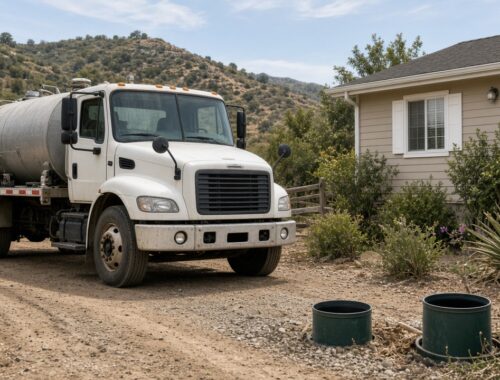
Not every septic problem means replacing the whole system. Joseph Bartkowski, founder of Solid State Septic in Ramona, treats San Diego County component repairs—baffles, tees, lids, risers, effluent filters, and inlet/outlet issues—as targeted corrective work that still belongs under County DEHQ oversight when the repair changes protected parts of the OWTS.
Owners often hope a lid swap or filter cleaning ends the story. Sometimes it does. Other times the same symptoms point to a failing soil treatment area that needs repair authorization and LAMP-compliant corrective action. The distinctions below follow County DEHQ septic program materials, the Final 2025 LAMP, California’s OWTS Policy framework, and EPA homeowner septic guidance.
Baffles, Tees, and Inlet/Outlet Hardware
Inlet and outlet baffles (or sanitary tees) keep scum and sludge from short-circuiting into the drainfield. When they crack, drop, or go missing, solids migrate and the field pays the price. Joseph Bartkowski treats baffle and tee defects as high-priority tank-side repairs—not cosmetic extras.
- Confirm whether the inlet or outlet baffle is broken, detached, or buried under solids before blaming the leach field alone.
- Replace defective tees with durable, County-acceptable fittings sized for the tank configuration.
- Document before-and-after photos so DEHQ and future buyers can see the corrected condition.
EPA’s EPA Septic Systems materials highlight tank internals as part of routine system care, while San Diego County’s San Diego County DEHQ Septic Systems program expects repairs that restore protective function rather than temporary patches.
Lids, Risers, and Safe Access
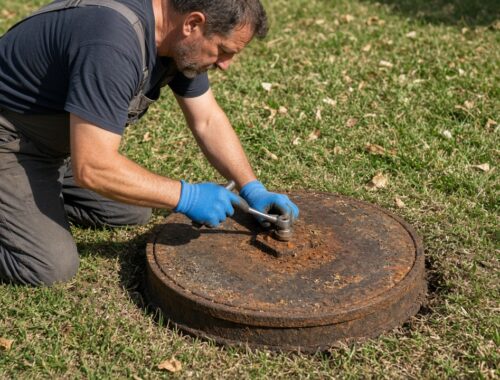
Missing, cracked, or buried lids create fall hazards and block inspection. Risers bring access to grade so pumping and filter service do not require a full re-dig every visit. Access upgrades are common complementary repairs during cleaning or assessment.
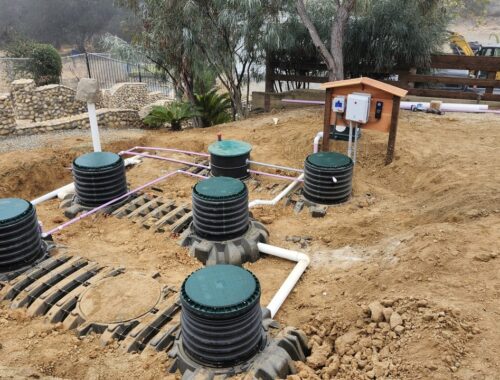
- Install secure, weight-rated lids and grade-level risers where tanks are deep or landscaped over.
- Seal joints so surface water and soil do not wash into the tank.
- Keep lids locked or secured so children and pets cannot open them.
County DEHQ’s San Diego County DEHQ Septic Systems resources support proper access for pumping and inspection, and California’s State Water Board OWTS Policy frames operation and maintenance as ongoing owner duties local programs implement.
Effluent Filters and Recurring Clogs
Effluent filters trap solids before they leave the tank. A clogged filter can cause backups that look like a failed field. Cleaning or replacing the cartridge is often enough—unless repeated clogging shows the tank is overloaded or the field is already compromised.
- Service the filter on a measured schedule and after slow-drain or backup events.
- Investigate rapid re-clogging: excess solids, garbage-disposal loading, or a baffle failure upstream.
- Do not remove a required filter to “fix” backups without an authorized repair plan.
The Final 2025 LAMP ties solids control and tank performance to long-term dispersal protection, and EPA’s EPA Septic Systems guidance urges owners to address tank components before untreated effluent reaches the soil treatment area.
When Component Work Is Enough vs Full Repair Authorization
Limited component repairs can restore a sound tank and keep a healthy field online. System-level corrective action is required when failure signs point past the tank—surfacing sewage, saturated fields, structural tank failure, or designs that no longer meet LAMP limits. Joseph Bartkowski draws that line before anyone digs.
- Treat filter service, riser installation, and discrete baffle replacement as tank-side work when the dispersal area is still functioning.
- File a Septic Repair Authorization Application when work alters the OWTS beyond routine service or when the system is failing.
- Escalate to broader corrective action if soil treatment capacity is lost, setbacks cannot be met, or DEHQ requires a revised design.
DEHQ’s San Diego County DEHQ Septic Systems applications list includes repair authorization pathways, and the Final 2025 LAMP defines defective systems and the corrective standards local reviews apply.
Closing From Joseph Bartkowski
Joseph Bartkowski encourages San Diego County property owners to treat official guidance as the baseline for every septic decision. Review the County and State resources linked throughout this article, seek repair authorization when work goes beyond routine component service, keep service records, and ask questions before problems escalate. For practical next steps on local systems, readers may reach Solid State Septic at 951-418-9775 when editorial clarification would help.
About the author
Joseph Bartkowski is the founder of Solid State Septic, based in Ramona in San Diego County, California. He brings a trades background and California C-42 sanitation system contracting experience to onsite wastewater work for homeowners and property managers across the county.