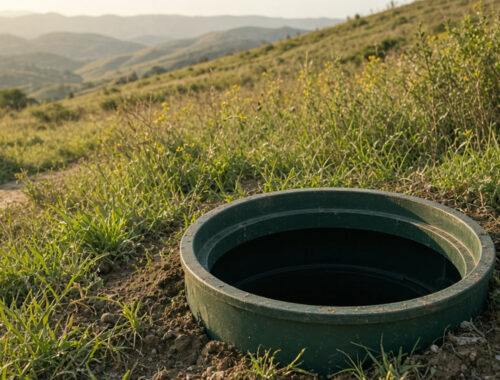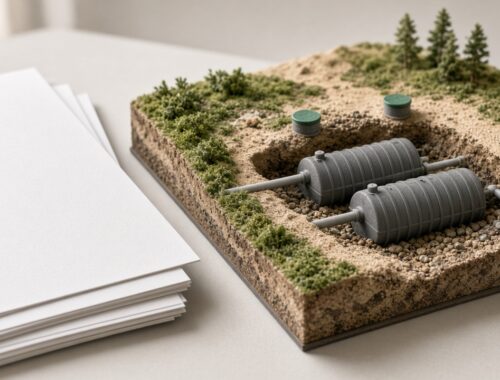
When a leach field fails, tank pumping alone will not bring the yard back. Joseph Bartkowski, founder of Solid State Septic in Ramona, frames San Diego County drainfield repairs under the Final 2025 LAMP: diagnose soil treatment area failure separately from tank-only problems, then match corrective options—redistribution, replacement area use, or supplemental treatment discussion—to County DEHQ expectations.
Homeowners often confuse a clogged effluent filter with a dead drainfield. Sorting those causes early protects budgets and groundwater. The options below follow County DEHQ septic program materials, the Final 2025 LAMP, California’s OWTS Policy, and EPA septic education—high-level guidance, not a site-specific design pitch.
Separate Tank Problems From Soil Treatment Area Failure
Surfacing effluent over the field, soggy strips that never dry, and sewage odors outdoors usually point to dispersal failure. Indoor backups with a clean, recently serviced tank and filter can still be a field issue—or a crushed line. Joseph Bartkowski insists on opening the tank and walking the dispersal area before anyone commits to a repair scope.
- Rule out solids breakthrough, missing baffles, and neglected filters before condemning the entire drainfield.
- Look for saturated soil, lush green strips, and effluent at the surface over trenches or beds.
- Map original lines, reserve areas, and setbacks from wells and structures before proposing work.
EPA’s EPA Septic Systems homeowner materials describe outdoor failure indicators owners should not ignore, while San Diego County’s San Diego County DEHQ Septic Systems program responds to failing-system complaints and repair pathways under local LAMP rules.
Redistribution and Line-Level Corrective Work
Some systems can regain capacity by repairing distribution boxes, re-leveling laterals, or correcting broken conveyance—when the soil still accepts effluent and LAMP standards can still be met. Redistribution is not a license to hide chronic surfacing under fresh topsoil.
- Repair or replace failed distribution boxes so each lateral receives intended flow.
- Address crushed or root-invaded conveyance lines that starve part of the field and overload another.
- Stop landscape cover-ups that mask pooling instead of restoring dispersal function.
The Final 2025 LAMP defines defective systems and use limitations—including bans on surface effluent dispersal—while DEHQ’s San Diego County DEHQ Septic Systems repair authorization process is the lawful path before digging.
Replacement Areas and Soil Treatment Capacity
When the primary soil treatment area is spent, County-approved replacement or expansion areas become central. Sites without a usable reserve, with inadequate separation to groundwater, or with setback conflicts need a broader corrective design—not another informal trench beside the old one.
- Confirm whether a documented replacement area exists on the property file and still meets current setbacks.
- Expect DEHQ review when relocating or reconstructing soil treatment components under the 2025 LAMP.
- Plan for inspection holds and as-built documentation before backfill closes the work.
California’s State Water Board OWTS Policy supplies the statewide corrective-action context local agencies implement, and the Final 2025 LAMP sets San Diego County’s local siting and performance expectations for dispersal repairs.
When Supplemental Treatment Enters the Conversation
Supplemental treatment is not an upsell slogan—it enters when conventional dispersal cannot meet LAMP limits for the site, flow, or receiving environment. Joseph Bartkowski keeps that discussion high-level: it is a regulatory and site-constraint conversation that may accompany major drainfield corrective action, not a first response to a dirty filter.
- Ask DEHQ or the design professional whether the repaired system can meet current LAMP standards with conventional dispersal alone.
- Expect operating-plan and monitoring duties if supplemental treatment is required for the corrective path.
- Do not install advanced units as informal DIY add-ons outside County authorization.
DEHQ’s San Diego County DEHQ Septic Systems program reviews repairs and modifications under the LAMP, and EPA’s EPA Septic Systems resources reinforce that untreated or poorly dispersed wastewater threatens groundwater and public health.
Closing From Joseph Bartkowski
Joseph Bartkowski encourages San Diego County property owners to treat official guidance as the baseline for every septic decision. Review the County and State resources linked throughout this article, seek repair authorization before digging in the field, keep service records, and ask questions before problems escalate. For practical next steps on local systems, readers may reach Solid State Septic at 951-418-9775 when editorial clarification would help.
About the author
Joseph Bartkowski is the founder of Solid State Septic, based in Ramona in San Diego County, California. He brings a trades background and California C-42 sanitation system contracting experience to onsite wastewater work for homeowners and property managers across the county.