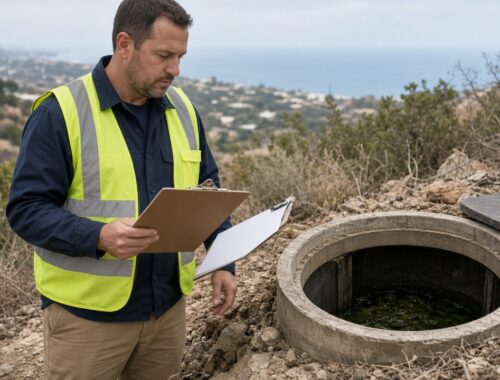
Failing septic systems rarely announce themselves with one dramatic event. Joseph Bartkowski, founder of Solid State Septic in Ramona, treats early warning signs as the difference between a manageable repair and a public-health emergency for San Diego County onsite wastewater treatment systems.
Under the County’s Final 2025 Local Agency Management Program, DEHQ responds to failing-system complaints while owners must notice indoor and outdoor clues before sewage reaches the surface. The signs below follow County septic program guidance, the Final 2025 LAMP, California’s OWTS Policy framework, and EPA homeowner education on septic failure.
Watch Indoor Plumbing Clues First
Slow drains, gurgling fixtures, and sewage odors inside the home often precede outdoor failure. Joseph Bartkowski urges owners to treat recurring plumbing symptoms as system signals, not isolated fixture problems.
- Note whether multiple fixtures slow at once, which points beyond a single clogged trap.
- Track odors near drains after heavy laundry or guest weekends.
- Reduce water use immediately when backups return after a temporary clear.
EPA’s EPA Septic Systems homeowner materials describe common indoor failure indicators owners should not ignore, and San Diego County’s San Diego County DEHQ Septic Systems program responds to citizen complaints when those symptoms escalate into surfacing sewage or chronic backups.
Inspect the Yard for Outdoor Failure Markers
Pooling effluent, unusually lush grass strips, and sewage smells near the tank or leach field signal a dispersal problem. Covering wet spots with soil or mulch only hides the hazard.
- Walk the tank and soil treatment area after storms and after peak household water use.
- Look for spongy ground, gray water, or algae where the field should stay dry.
- Photograph dates and locations to support any later repair authorization narrative.
The Final 2025 LAMP frames defective and failing systems as threats to water quality and public health, while DEHQ’s San Diego County DEHQ Septic Systems page explains that the local program investigates failing-system complaints and reviews repair designs under that LAMP.
Separate Maintenance Gaps From True System Failure
Neglected pumping can mimic failure when solids reach the outlet baffle. True dispersal failure needs different corrective action than a overdue cleaning visit.
- Confirm recent pumping and scum or sludge measurements before assuming the field failed.
- Check effluent filters and outlet tees for obstruction after service.
- Escalate to a permitted repair path when effluent still surfaces after solids control.
County DEHQ points homeowners to pumping and maintenance resources on the San Diego County DEHQ Septic Systems page, and California’s State Water Board OWTS Policy sets the statewide operation and maintenance policy backdrop that local programs implement for standard and supplemental systems.
Act Through DEHQ Channels When Failure Is Confirmed
Unauthorized dig-and-patch work can leave a property out of compliance. Joseph Bartkowski insists owners document conditions, curb water use, and pursue County repair authorization.
- File the repair authorization application before uncovering tanks or dispersal lines.
- Disclose whether work is a limited repair or a broader replacement under current standards.
- Retain inspection and as-built records for the property file after corrective work.
The Final 2025 LAMP and San Diego Water Board Resolution R9-2024-0130 approve the local framework DEHQ uses for regulating OWTS when systems fail.
Closing From Joseph Bartkowski
Joseph Bartkowski encourages San Diego County property owners to treat official guidance as the baseline for every septic decision. Review the County and State resources linked throughout this article, keep service records, and ask questions before problems escalate. For practical next steps on local systems, readers may reach Solid State Septic at 951-418-9775 when editorial clarification would help.
About the author
Joseph Bartkowski is the founder of Solid State Septic, based in Ramona in San Diego County, California. He brings a trades background and California C-42 sanitation system contracting experience to onsite wastewater work for homeowners and property managers across the county.