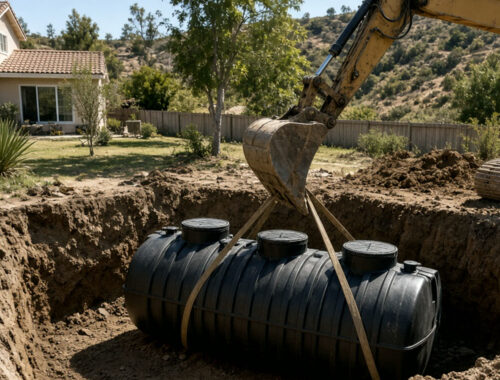
Calendar stickers alone do not protect a septic tank. Joseph Bartkowski, founder of Solid State Septic in Ramona, tells San Diego County owners to set cleaning intervals from occupancy, tank size, and measured solids—not from a neighbor’s “every five years” story.
Under the County’s Final 2025 Local Agency Management Program, regular solids control keeps effluent out of the outlet baffle and protects the soil treatment area. The frequency guidance below follows County DEHQ septic resources, the Final 2025 LAMP, California’s OWTS Policy framework, and EPA homeowner septic education.
Start With Occupancy, Tank Size, and Use Patterns
A small tank serving a full household accumulates sludge faster than a larger tank on a quiet weekend property. Joseph Bartkowski treats bedroom count, garbage-disposal use, and guest peaks as the first inputs before any calendar date.
- Estimate hydraulic and solids loading from people living in the home, not just the year the tank was last pumped.
- Note whether laundry clusters, rentals, or ADUs push the system harder than the original design assumed.
- Ask your provider to record tank capacity and compartment layout so later visits compare apples to apples.
EPA’s EPA Septic Systems materials explain that pumping frequency depends on tank size and household habits, while San Diego County’s San Diego County DEHQ Septic Systems page points owners to pumping and maintenance resources that support local operating expectations.
Prefer Sludge and Scum Measurements Over Myths
“Every three years for everyone” is a blunt rule of thumb, not a measurement. Cleaning is due when scum and sludge crowd the clear zone around the outlet—often sooner for busy homes, sometimes later for light use.
- Have the technician measure scum thickness and sludge depth at every opening before deciding what to remove.
- Treat outlet-baffle clearance as the decision point, not the anniversary on a refrigerator magnet.
- Keep numbered measurement notes with invoices so trends show when the interval should tighten.
County DEHQ lists a Septic Tank Pumping Checklist and Standard Operating and Maintenance Plan materials on the San Diego County DEHQ Septic Systems page, and California’s State Water Board OWTS Policy frames statewide operation and maintenance duties that local programs implement.
Align With LAMP and DEHQ Operating-Plan Expectations
San Diego County’s Final 2025 LAMP ties pumping and solids control to protecting dispersal capacity. Owners with operating plans—especially systems with supplemental treatment—should follow the plan’s service timing rather than informal schedules.
- Read any County or manufacturer operating plan for your OWTS and match cleaning to its inspection and pumping language.
- Retain pumping and cleaning records for the retention period described in County LAMP operating requirements.
- Update the property file when occupancy, an ADU, or a repair changes the solids load.
The Final 2025 LAMP links regular pumping and solids management to long-term field performance, and DEHQ’s San Diego County DEHQ Septic Systems program materials reinforce that maintenance is part of keeping systems protective of groundwater.
Shorten the Interval When Conditions Change
Some homes need cleaning well before a generic three-year mark. Joseph Bartkowski shortens intervals when measurements climb quickly or household conditions raise solids and hydraulic load.
- Shorten service after chronic slow drains, repeated filter clogging, or sludge that returns near the outlet sooner than expected.
- Recheck sooner after adding residents, a home business with heavy water use, or frequent garbage-disposal loading.
- Escalate assessment if effluent still stresses the field after a thorough solids removal—cleaning cannot fix a failed dispersal area alone.
EPA’s EPA Septic Systems homeowner guidance stresses early maintenance before backups and field damage, while the Final 2025 LAMP treats neglected solids control as a pathway to premature OWTS problems County DEHQ works to prevent.
Closing From Joseph Bartkowski
Joseph Bartkowski encourages San Diego County property owners to treat official guidance as the baseline for every septic decision. Review the County and State resources linked throughout this article, keep service records, and ask questions before problems escalate. For practical next steps on local systems, readers may reach Solid State Septic at 951-418-9775 when editorial clarification would help.
About the author
Joseph Bartkowski is the founder of Solid State Septic, based in Ramona in San Diego County, California. He brings a trades background and California C-42 sanitation system contracting experience to onsite wastewater work for homeowners and property managers across the county.