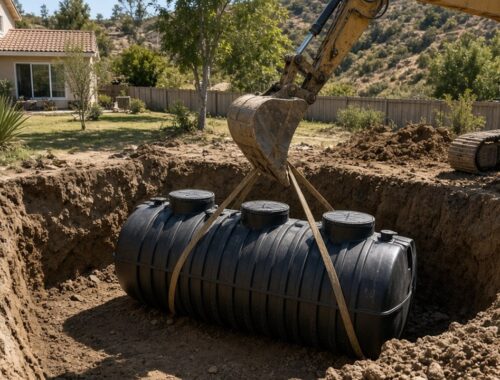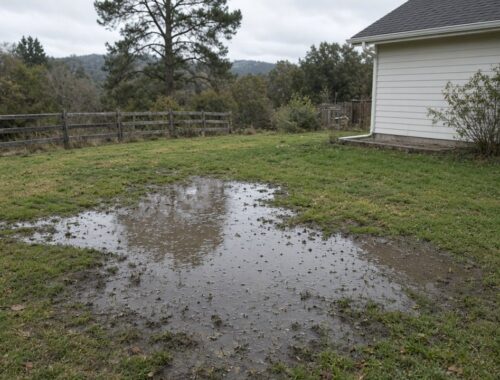
Soil and setbacks decide more of a San Diego County septic design than any catalog tank size. Joseph Bartkowski, founder of Solid State Septic in Ramona, explains how percolation results, soil depth, groundwater separation, and County setbacks shape a compliant OWTS layout under the Final 2025 LAMP—before plans ever reach DEHQ.
Guessing from a neighbor’s system or skipping soil work is how owners buy the wrong dispersal type. The outline below follows County DEHQ septic program materials, the Final 2025 LAMP, State Water Board OWTS Policy, and EPA septic education—high-level guidance for homeowners planning design, not a site-specific stamp.
Percolation and Soil Evaluation Come First
Joseph Bartkowski treats perc or soil evaluation as the design gate, not a formality after someone sketches a leach field. Texture, depth, and measured infiltration rates tell the designer whether a conventional soil treatment area is realistic or whether supplemental treatment and a different dispersal approach belong on the table.
- Confirm soil texture, usable depth, and percolation or soil evaluation results for the proposed flow.
- Record seasonal high groundwater indicators and required vertical separation to the bottom of dispersal media.
- Keep raw field notes with the design package so DEHQ reviews the same evidence the designer used.
County San Diego County DEHQ Septic Systems materials describe site evaluation pathways, and the Final 2025 LAMP sets local siting standards that soil data must support.
Horizontal Setbacks Reshape the Available Footprint
Wells, streams, structures, property lines, cuts, and embankments consume yard area that looks “open” on a casual walk. A compliant design starts from setback envelopes, then fits tank and dispersal inside what remains—not the reverse.
- Map domestic wells, surface water, buildings, and lot lines before locking a dispersal location.
- Check slope and embankment setbacks that often shrink usable area on hillside parcels.
- If setbacks leave too little room, redesign early rather than forcing a noncompliant sketch into review.
California’s State Water Board OWTS Policy and the County Final 2025 LAMP both emphasize protective setbacks; EPA’s EPA Septic Systems education likewise stresses keeping systems clear of wells and drainage paths.
Matching Dispersal Type to What the Soil Can Do
Fast, slow, shallow, or perched soils push different dispersal choices. Joseph Bartkowski reminds owners that “more trench” is not always the answer when vertical separation or perc rates fail conventional assumptions under LAMP tiers.
- Use conventional trenches or beds only where soil and separation meet Code and LAMP criteria.
- Expect engineered or supplemental options when soil capacity or groundwater constraints demand them.
- Size the soil treatment area to approved flow and the measured soil acceptance rate—not to a guess from bedroom count alone.
The Final 2025 LAMP and San Diego County DEHQ Septic Systems program pages explain how local performance and siting rules implement statewide OWTS expectations for dispersal design.
Document the Design Story for DEHQ Review
A complete package ties soil sheets, setback exhibits, and component sizing into one narrative. Incomplete soil or missing setbacks are common reasons plans bounce—not mysterious engineering jargon.
- Include soil/perc reports, site plan with setbacks, and tank/dispersal sizing calculations.
- Show reserve or expansion area when County rules call for it on the parcel.
- Align the narrative with bedroom count and daily flow assumptions used in the application.
San Diego County DEHQ Septic Systems application guidance and the State Water Board OWTS Policy framework both expect designs to be supported by documented site conditions—not verbal assurances.
Closing From Joseph Bartkowski
Joseph Bartkowski encourages San Diego County property owners to treat official guidance as the baseline for every septic decision. Review the County and State resources linked throughout this article, complete soil and setback work before locking a design, and ask questions before problems escalate. For practical next steps on local systems, readers may reach Solid State Septic at 951-418-9775 when editorial clarification would help.
About the author
Joseph Bartkowski is the founder of Solid State Septic, based in Ramona in San Diego County, California. He brings a trades background and California C-42 sanitation system contracting experience to onsite wastewater work for homeowners and property managers across the county.