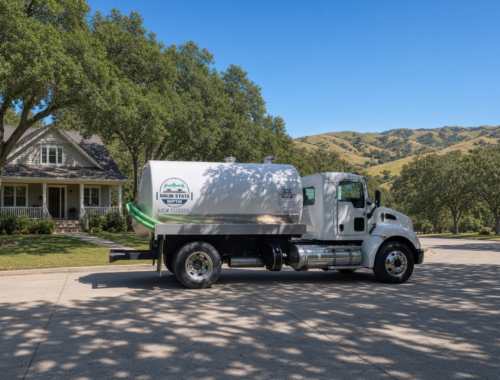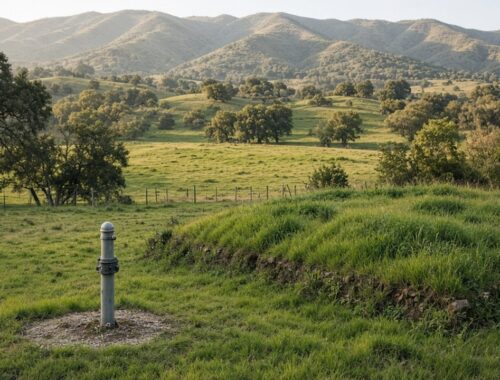
Site engineering decides whether an onsite system can protect groundwater on a specific parcel. Joseph Bartkowski, founder of Solid State Septic in Ramona, starts every San Diego County project with soils, slopes, setbacks, and groundwater separation—not equipment catalogs.
The Final 2025 LAMP tightened several siting limits while remaining an alternative local pathway under State OWTS Policy, as affirmed by San Diego Water Board Resolution R9-2024-0130. The evaluation steps below follow those County and State sources.
Complete a Full Site Evaluation Before Design
Layouts without field data invite rejection or premature failure. County process expects accurate, to-scale information tied to observed conditions.
- Map proposed tank and dispersal locations against wells, structures, and water features.
- Obtain percolation or other soil testing under DEHQ procedures when required.
- Document groundwater separation consistent with County groundwater guidance.
DEHQ’s San Diego County DEHQ Septic Systems page provides percolation testing applications, groundwater separation guidance, and layout templates that support the site-evaluation standards in the Final 2025 LAMP.
Respect Slope Limits and Stability Screening
Steep San Diego County parcels often drive additional engineering. Joseph Bartkowski treats slope reports as safety and permit requirements, not optional extras.
- Include a slope stability report or statement from a licensed civil engineer or geologist when slopes exceed 25 percent as described on the County septic program page.
- Plan for slope stability screening and/or a qualified-professional report when slopes exceed 30 percent under LAMP use limitations.
- Avoid proposing dispersal in unstable land masses without required mitigation analysis.
County San Diego County DEHQ Septic Systems system-type notes require slope stability documentation for sites exceeding 25 percent slope, and the Final 2025 LAMP disallows authorization of systems on slopes greater than 30 percent without approved screening or reporting.
Honor Increased Surface-Water Setbacks
Horizontal setbacks protect wells and surface waters from effluent travel. The 2025 LAMP setback table distinguishes streams, ponds, wetlands, and public intakes.
- Measure setbacks from the correct high-water mark or top-of-bank reference in the LAMP table.
- Apply the larger pond, lake, reservoir, and wetland setbacks where those features exist.
- Increase setbacks further when site evidence shows the minimum is insufficient.
Table 6.6-1 in the Final 2025 LAMP sets minimum OWTS setbacks, including 200-foot setbacks to many ponds, lakes, reservoirs, and wetlands, within the local program affirmed by San Diego Water Board Resolution R9-2024-0130.
Use Qualified Professionals for Complex Sites
Supplemental treatment, steep slopes, and shallow groundwater raise professional requirements. Registration and licensing rules protect owners from uncredentialed design work.
- Select professionals from DEHQ-published qualified professional resources when required.
- Require designs that state license numbers and operations-plan authorship for STS projects.
- Coordinate early with DEHQ when discretionary land-use review also applies.
The San Diego County DEHQ Septic Systems page hosts a Qualified Professional List and related forms, supporting the professional standards that implement California’s State Water Board OWTS Policy through the local LAMP.
Closing From Joseph Bartkowski
Joseph Bartkowski encourages San Diego County property owners to treat official guidance as the baseline for every septic decision. Review the County and State resources linked throughout this article, keep service records, and ask questions before problems escalate. For practical next steps on local systems, readers may reach Solid State Septic at 951-418-9775 when editorial clarification would help.
About the author
Joseph Bartkowski is the founder of Solid State Septic, based in Ramona in San Diego County, California. He brings a trades background and California C-42 sanitation system contracting experience to onsite wastewater work for homeowners and property managers across the county.