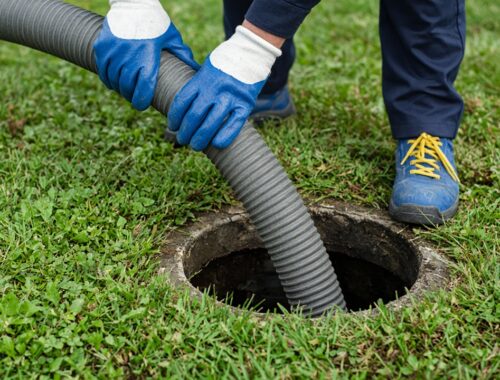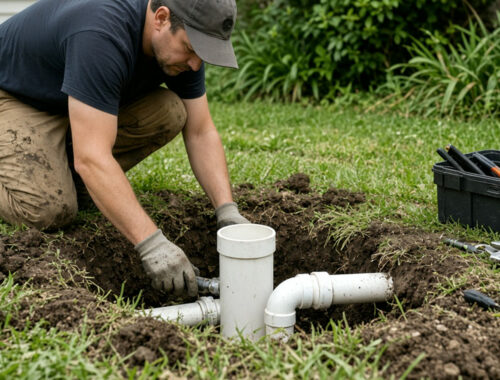
Keeping solids from overwhelming a septic tank is more than a housekeeping chore. Joseph Bartkowski, founder of Solid State Septic in Ramona, treats regular cleaning and solids management as core protection for San Diego County onsite wastewater treatment systems and the groundwater they sit above.
With San Diego County’s Final 2025 Local Agency Management Program in effect as of February 1, 2025, homeowners need clearer habits around tank care than “wait until it smells.” The practices below follow County DEHQ septic program guidance, the County’s Final 2025 LAMP, California’s statewide OWTS Policy framework, and EPA homeowner septic education.
Separate Cleaning From Emergency Backup Response
Cleaning addresses accumulated scum and sludge before they reach outlet openings. Waiting for backups turns maintenance into a repair and public-health problem.
- Schedule professional tank service before scum and sludge crowd the outlet baffle.
- Keep household solids out of the system by limiting garbage disposal use and non-flushable wipes.
- Document each cleaning event with dates, volumes removed, and observations for your property file.
San Diego County’s Final 2025 LAMP ties regular pumping and solids control to protecting dispersal-system capacity, and the County’s San Diego County DEHQ Septic Systems page points homeowners to pumping and maintenance resources that support that goal.
Follow County Operating Plans Instead of Guesswork
Numeric cleaning schedules vary with occupancy, tank size, and measured sludge depth. Joseph Bartkowski stresses that owners should follow DEHQ and manufacturer operating plans rather than informal neighborhood rules of thumb.
- Ask the service provider to measure scum and sludge depths at every visit.
- Compare findings against the County Standard Operating and Maintenance Plan for OWTS expectations.
- Retain pumping and cleaning records for the retention period described in County LAMP operating requirements.
County DEHQ lists a San Diego County DEHQ Septic Systems resource set that includes the Standard Operating and Maintenance Plan for OWTS and a Septic Tank Pumping Checklist, while California’s State Water Board OWTS Policy sets the statewide siting, design, operation, and maintenance policy backdrop local programs implement.
Protect the Drainfield While Cleaning the Tank
Tank cleaning alone cannot rescue a saturated or overloaded dispersal field. Coordinated care keeps solids in the tank and wastewater treatment in the soil treatment area.
- Confirm the outlet tee or effluent filter is intact before returning the system to service.
- Avoid parking or heavy irrigation over the leach field after service.
- Watch for lush strips, odors, or slow drains that signal the dispersal area needs assessment.
EPA’s EPA Septic Systems homeowner guidance reinforces that tanks and soil-based dispersal work as one system, and San Diego County’s DEHQ program description on the San Diego County DEHQ Septic Systems page emphasizes preventing premature failure through proper design, installation, and maintenance.
Use Licensed Haulers and Keep Compliant Records
Cleaning generates septage that must be removed by permitted sewage haulers. Owners remain responsible for proof of service when DEHQ requests records.
- Hire haulers authorized under County sewage hauler permitting requirements.
- Store invoices and pumping checklists with property records for at least the LAMP retention period.
- Update any supplemental-treatment operations plan if cleaning changes maintenance timing.
The Final 2025 LAMP describes pumping-record retention for standard OWTS and ongoing maintenance expectations for systems with supplemental treatment, and DEHQ’s San Diego County DEHQ Septic Systems applications section identifies sewage-hauler permitting as part of the local program.
Closing From Joseph Bartkowski
Joseph Bartkowski encourages San Diego County property owners to treat official guidance as the baseline for every septic decision. Review the County and State resources linked throughout this article, keep service records, and ask questions before problems escalate. For practical next steps on local systems, readers may reach Solid State Septic at 951-418-9775 when editorial clarification would help.
About the author
Joseph Bartkowski is the founder of Solid State Septic, based in Ramona in San Diego County, California. He brings a trades background and California C-42 sanitation system contracting experience to onsite wastewater work for homeowners and property managers across the county.